
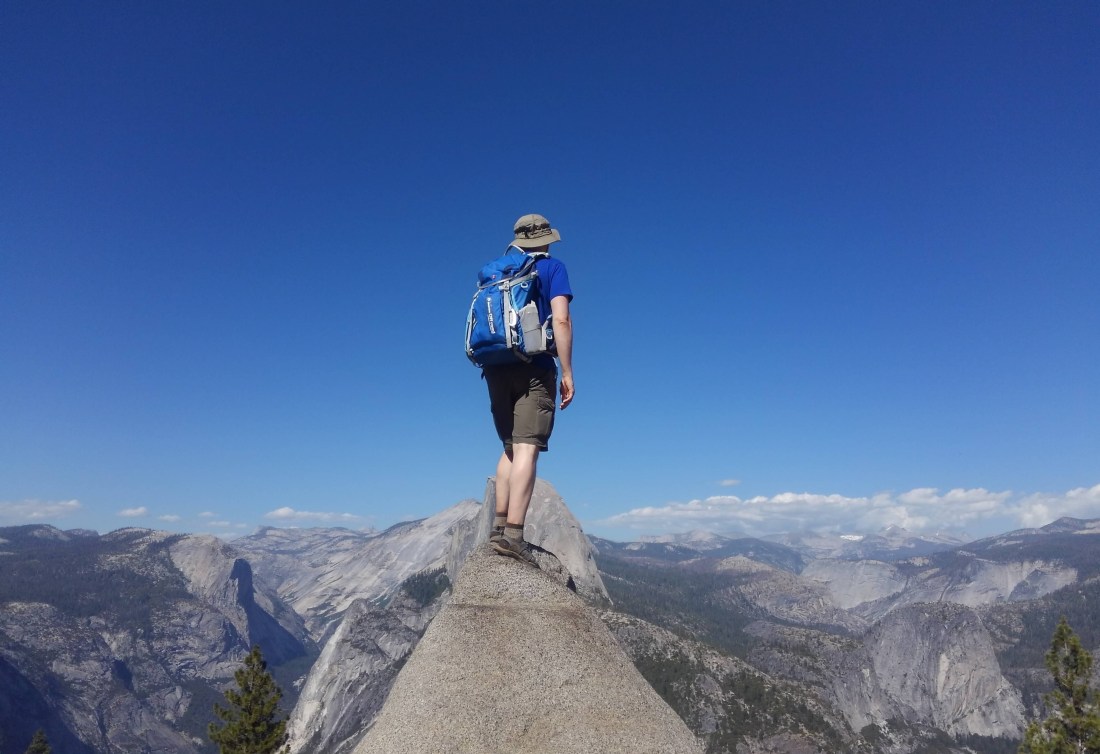
 Fellow hiker Daniil enjoying a magnificent view of Yosemite valley due to good planning by our guide, Rich.
Planning. Good planning. It’s essential to an enjoyable travel experience. But what does it look like? Summiting a mountain top? A list of attributes? Checked boxes? A check list? A person? I would have to say it could be any and all of these.
There is a saying: “no battle plan survives first contact with the enemy.” Travel planning is not dissimilar. It might only be minor changes such as a delay in getting a rental car. It might mean switching days you plan to be in locations due to weather or other parties you plan to travel with have been delayed. It might mean ending up at a different location or trail than you expected.
Planning is a road map for successful travel.
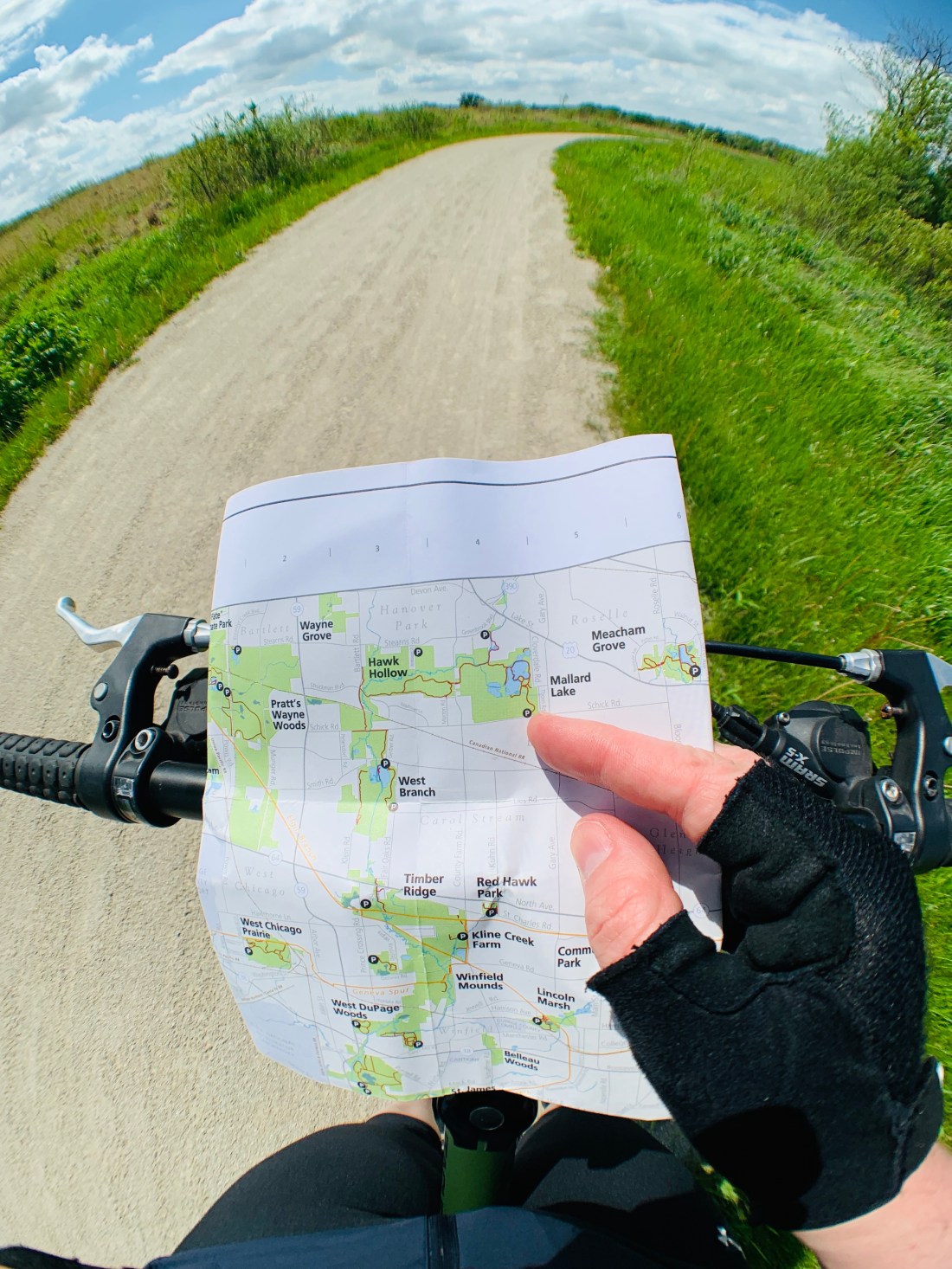 Myself reviewing a map to confirm location and features of my intended route on a recent bike ride.
Here are a few elements to consider for planning. Most may seem pretty basic, but I’ve seen numerous people ill-prepared on trips because of lack of basic planning skills or considerations.
Goals. What is it that you are traveling for? What do you want to do or see? Or, not do or see, for that matter.
Timetable. How long. Where. Mapping it out can not only help you stay on track but give you options and alternatives if/when things pan out differently than you planned.
Resources. Costs. Things you need. Packing/ activity gear list. It’s good to have basic list of travel items and travel expenses. Everyone is a little different, but having a baseline is good, especially if you have multiple things going on and can only do a little packing at a time. And if there are multiple desired activities, but you have a limited budget for expenses.
Leg work. Prep activities. That could be anything from reservations to an exercise plan or learning a language. What you put in directly impacts what you get out. As they say, “knowledge is power.” Or, “know before you go.” The more you know and handle up front, the better situated you will be. You will be preventing problems by anticipating and avoiding them.
Contingencies. Think of some common problems for your travel and some that might be specific to you destination and/or activities. Weather delays. Food borne illness. Self rescue. Getting robbed. Losing luggage. Getting lost. Think of the scenario and what you will need to do or have in place, so if it does happen you can overcome the problem more easily. Plan a few alternative routes, activities, options. Even mentally walking through various scenarios is helpful. When I travel alone, I typically have a few alternate plans for every larger activity or phase of travel. Or, I have a skill set that addresses the potential problem– first aid, map reading skills. And, yes, I’ve sometimes had to use plan “C” or “D”. It saves time and energy to think ahead.
Flexibility. This is very important. I cannot stress how important this mindset is. I’ve seen folks shut down for all intents and purposes because of one relatively minor thing changing in their plan. I’ve also seen folks angry or panicked if something out of their control or unanticipated happened. Travel, especially with others, is some give and take. Be flexible not just with plans, but people. The best tours I’ve been on have been run by folks who are flexible. If solo, your trip will go better if you are flexible with local customs and culture and people.
Competency. When traveling with a group or part of a tour, it’s nice to have others handle the booking and logistics of travel, but as good as the best are, don’t rely on every minute detail to be handled for you, especially if this is a first time traveling with a particular group or guide or touring company. Be sure you know enough to handle basic travel, if there should be any problems.
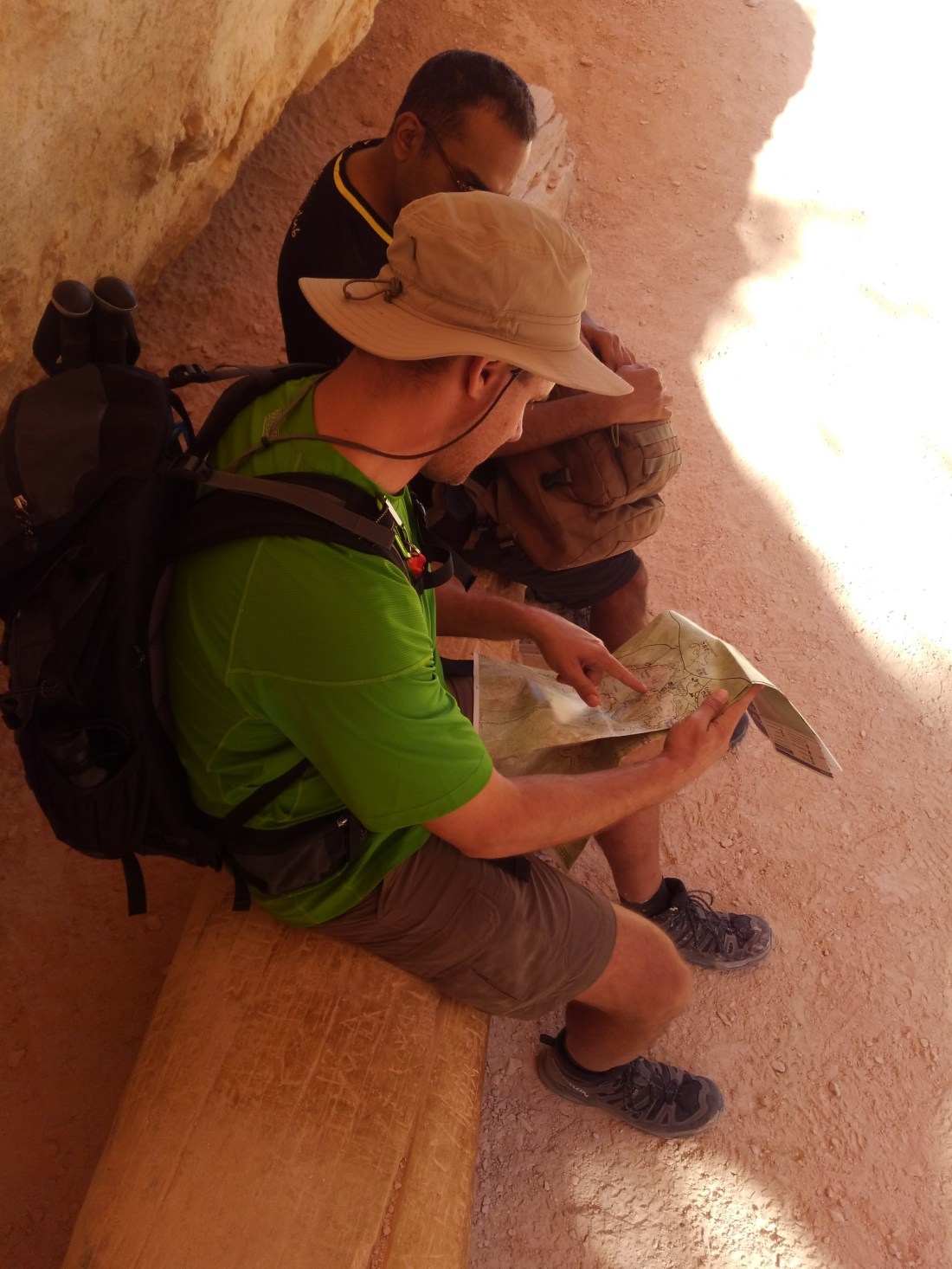 Our guide Rich, reviewing and pointing out features on a trail map for Bryce Canyon.
These are basic categories to consider. What is essential in your planning?
 Portraits of a Traveler